Home Workout Plan, No Equipment: A Weekly Guide
· 5 min read
A good home workout plan isn’t a random list of exercises. It’s a weekly structure that balances effort and recovery, and a clear way to make things harder as you get stronger. Here’s how to build one with nothing but your bodyweight.
How many days a week should you train?
For most people, three to four sessions a week is the sweet spot. Three full-body sessions on non-consecutive days is enough to build strength and fitness if you’re starting out or have a busy schedule. Four sessions works well once you’ve trained consistently for a couple of months and recover comfortably between workouts.
Training every day isn’t necessary, and for most people it isn’t a good idea at the start. Muscles adapt during the rest between sessions, not during the session itself. If you want to move on your off days, a walk or some light mobility work is a better choice than another hard workout.
Pick a number of days you can realistically keep for the next eight weeks, not the number you’d manage in your most motivated week. Consistency over months beats a perfect plan you abandon after ten days.
A sample weekly schedule
The simplest effective structure alternates two different full-body sessions, A and B. Each one trains the whole body, but with different exercises, so you hit muscles from different angles while still getting rest days in between.
- 3 days a week: Monday A, Wednesday B, Friday A. The following week, start with B so both sessions get equal practice.
- 4 days a week: Monday A, Tuesday B, Thursday A, Saturday B, with Wednesday, Friday and Sunday as rest or light activity days.
- Each session: 5 minutes of warm-up, 15 to 20 minutes of main work, and 3 to 5 minutes of cool-down.
Two full-body sessions to alternate
Run each session as a circuit: do the exercises back to back with about 20 seconds between them, rest 90 seconds after each round, and complete 3 to 4 rounds. The rep ranges are a starting point; choose a number that leaves you with one or two good reps in reserve.
Session A, focused on pushing and squatting:
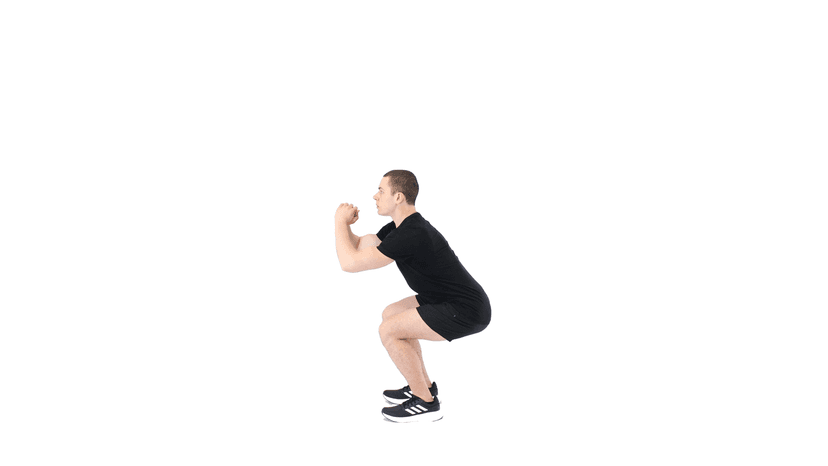
- Squats, 12 to 15 reps
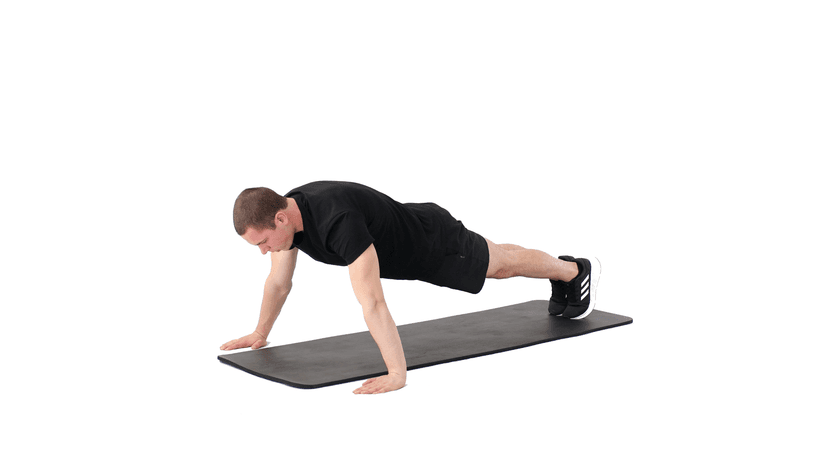
- Push-ups, 6 to 12 reps (knee push-ups if full ones aren’t possible yet)
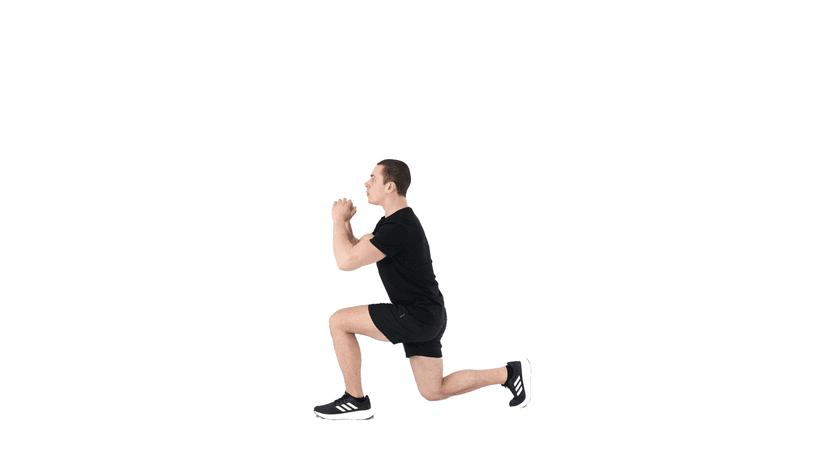
- Reverse lunges, 8 reps per leg
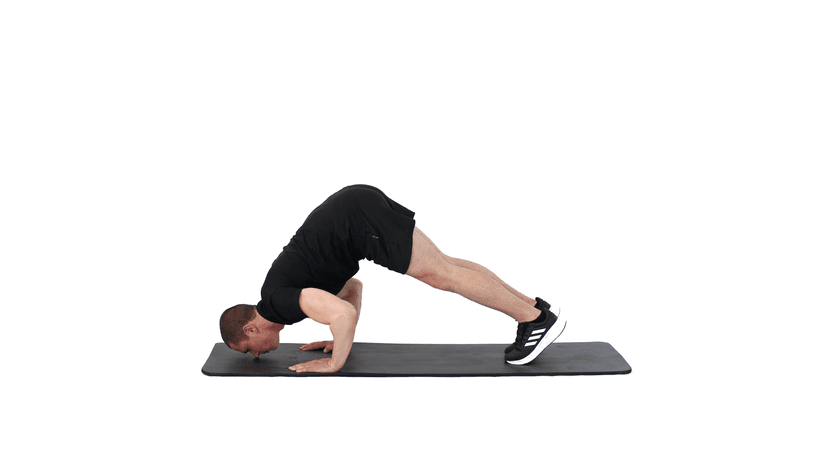
- Pikes, 8 to 10 reps, to work the shoulders and core
- Plank hold, 30 to 45 seconds
Session B, focused on the posterior chain and core:
- Split lunges, 8 reps per leg
- Hip raises, 15 reps, pausing at the top
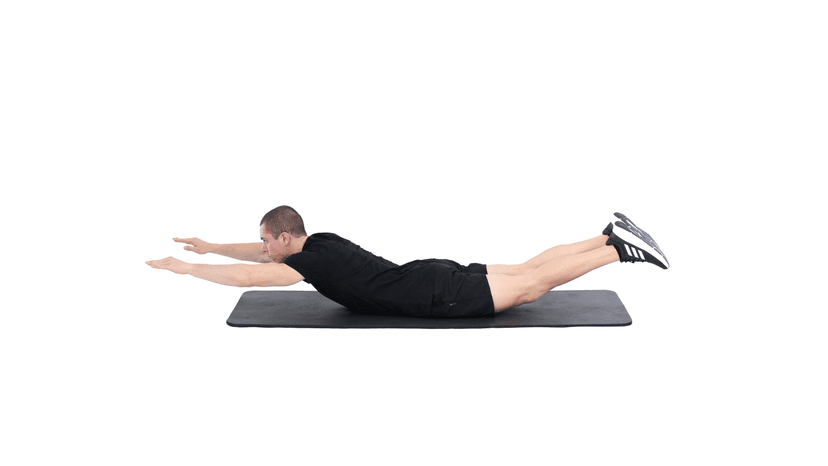
- Superman, 10 to 12 slow reps, for the lower and upper back
- Diamond push-ups or knee push-ups with hands close together, 6 to 10 reps
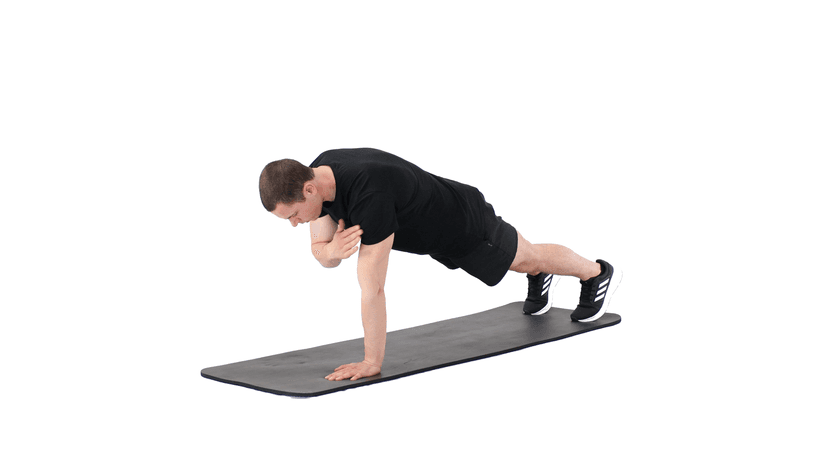
- Plank shoulder taps, 10 per side, keeping the hips as still as possible
How to progress without weights
Without dumbbells, you can’t just add 2 kg to the bar. You still have plenty of ways to make bodyweight exercises harder, and you should use them deliberately rather than all at once. A good rule: once you can hit the top of a rep range for every round with clean form, progress that exercise.
- More reps: the simplest lever, useful up to roughly 15 to 20 reps per set.
- Slower tempo: take three to four seconds to lower each rep. More time under tension makes the same exercise much more demanding.
- Pauses: hold the hardest position, like the bottom of a squat or lunge, for one to two seconds.
- Harder variations: move from knee push-ups to push-ups to diamond or archer push-ups, or from squats to split lunges to Cossack or shrimp squats.
- Less rest: shorten the break between rounds once the rest of the session feels under control.
- More rounds: add a fourth or fifth round once the session time allows it.
Write down what you did each session, or use an app that logs it for you. Progress in bodyweight training is easy to miss without a record, and seeing that you did 8 push-ups a month ago and 14 now is one of the best motivators there is.
Recovery, deloads and listening to your body
Every six to eight weeks, consider an easier week: same schedule, but about half the rounds. It gives joints and tendons time to catch up and often leaves you stronger the week after. Sleep and regular meals matter as much as the plan itself.
Expect some muscle soreness after new exercises. Sharp pain, joint pain or pain that lingers for days is a different signal: back off that movement, and if you have a medical condition or the pain persists, talk to a doctor or physiotherapist.
Choosing a ready-made plan
Building your own plan works, but it means doing the programming yourself: deciding when to progress, rotating exercises and keeping track of every session. A structured plan removes that guesswork.
If you already have a few weeks of training behind you and want to build muscle at home, Fitnopia’s Body Forge plan uses 24 guided sessions of high-volume bodyweight work with a focus on time under tension. Complete beginners will be better served by the gentler Start Strong plan first. Both run on the free app and log every rep for you.