20-Minute Bodyweight Workout for Beginners
· 5 min read
You don’t need a gym, a bench or a set of dumbbells to start training. This guide gives you a full 20-minute bodyweight routine you can do in your living room today, plus the rules that will keep you progressing safely.
Why 20 minutes is enough to start
The biggest obstacle for beginners is rarely the workout itself. It’s fitting it into a week and coming back to it. A 20-minute session is short enough to do before work or after dinner, and long enough to train every major muscle group if you keep the rest periods honest.
Bodyweight training also removes most of the setup time. There’s nothing to load, adjust or wait for. You roll out a mat, warm up, and you’re working within a couple of minutes. For a beginner, that low friction matters more than any perfect program.
Your goal for the first few weeks is simple: learn the movements, finish every session feeling like you could have done a little more, and show up two or three times a week. Intensity can come later.
Warm-up: 5 minutes
Do each movement for about 40 seconds, then move straight to the next one. The aim is to raise your heart rate slightly and move every joint you’re about to load, not to get tired.
- Jumping jacks, 40 seconds (step side to side instead of jumping if you prefer low impact)
- Shoulder warm-up, 40 seconds of slow arm circles in both directions
- Hip circles, 40 seconds, changing direction halfway
- Knee lifts, 40 seconds, alternating legs at a steady pace
- Cat-cow, 40 seconds, moving slowly with your breath
- Inchworms, 4 to 5 slow reps, bending your knees as much as you need
- Bodyweight squats to a comfortable depth, 40 seconds at an easy tempo
The 12-minute beginner circuit
Complete the five exercises below in order, resting about 15 seconds between them. That’s one round. Rest 60 seconds, then repeat for 3 rounds in total. If you’re short on time or energy, two rounds is still a real workout.
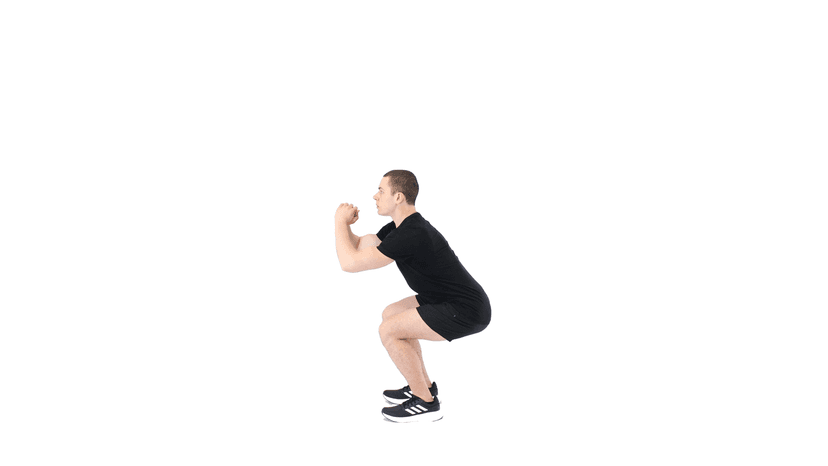
- Squats: 10 reps. Feet about shoulder-width apart, sit back and down, keep your heels on the floor and your chest up.
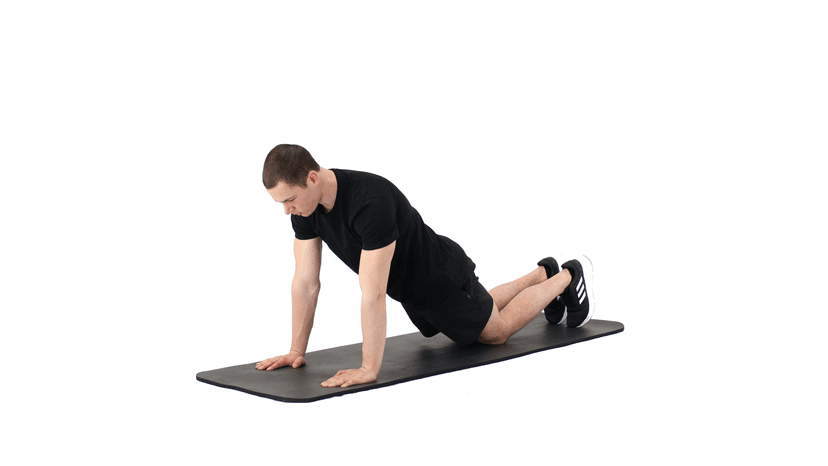
- Knee push-ups: 6 to 8 reps. Hands slightly wider than your shoulders, body in a straight line from knees to head, lower your chest towards the floor.
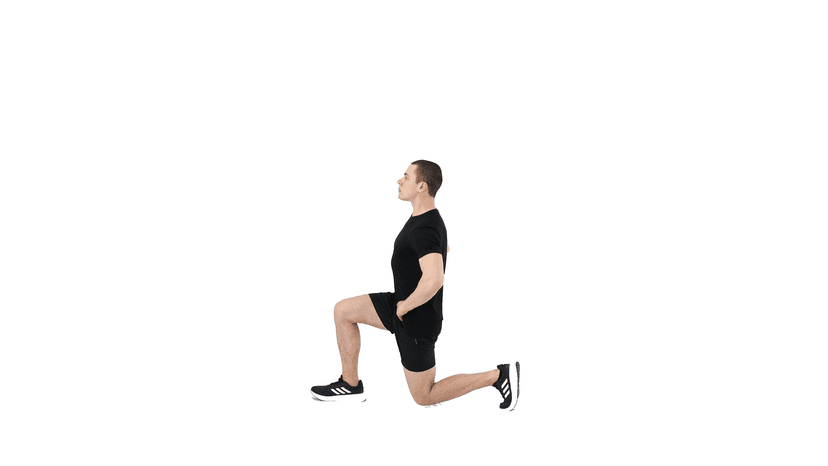
- Reverse lunges: 6 reps per leg. Step one foot back, lower until both knees are bent, push through the front heel to come back up.
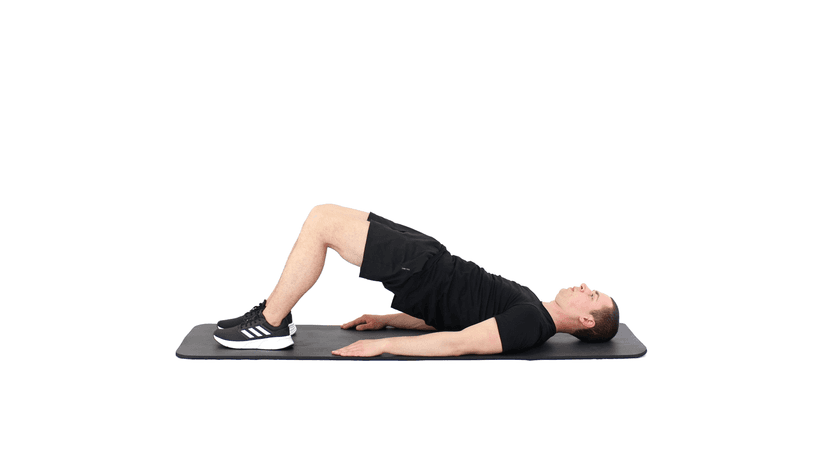
- Hip raises: 12 reps. Lying on your back with knees bent, squeeze your glutes to lift your hips, pause for a second at the top.
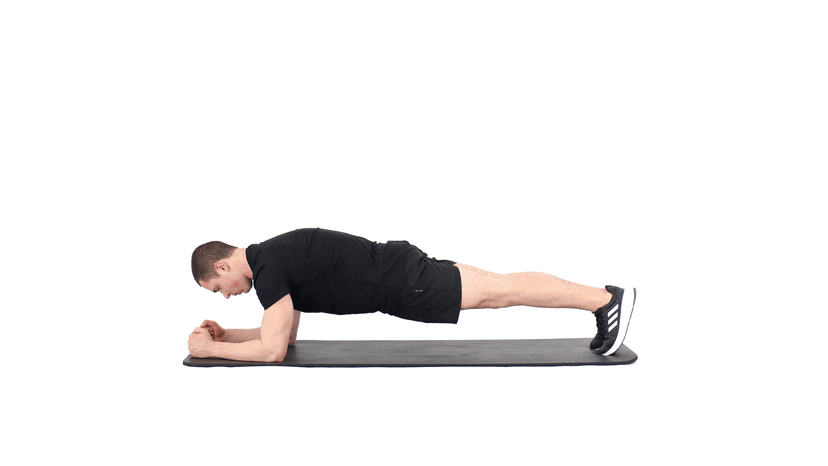
- Plank hold: 20 seconds. Forearms or hands on the floor, ribs pulled down, glutes tight. Drop to your knees if your lower back starts to sag.
Count your reps rather than rushing to beat a clock. A slow, controlled squat teaches you far more than a fast, sloppy one, and controlled reps are what make the next step up possible.
Cool-down: 3 minutes
Finish by walking around for 30 seconds to let your breathing settle, then hold each stretch for about 20 to 30 seconds. Breathe slowly and stay in a range where you feel a gentle stretch, never pain.
- Child’s pose, to relax your lower back and shoulders
- Quad stretch, one side then the other
- Hamstring stretch, one side then the other
- Cobra, gently, keeping your hips on the floor
How often to train and how to progress
Three sessions a week on non-consecutive days, for example Monday, Wednesday and Friday, is a good starting rhythm. It gives your muscles time to recover and makes the habit easy to plan around.
Once all three rounds feel manageable with good form, progress one variable at a time rather than everything at once:
- Add 2 reps to each exercise, or 5 to 10 seconds to the plank
- Cut the rest between rounds from 60 to 45 seconds
- Swap knee push-ups for regular push-ups, starting with just a few reps
- Slow down the lowering part of each rep to around three seconds
Some muscle soreness a day or two after your first sessions is normal and usually fades as your body adapts. Sharp or joint pain is different: stop that exercise, and if you have a health condition or ongoing pain, check with a doctor or physiotherapist before continuing.
Following a structured plan
A single workout gets you started. A plan keeps you going. Without one, most beginners either repeat the same session until it gets boring or jump to something too hard too soon.
Fitnopia’s Start Strong plan is built for exactly this stage: 18 guided bodyweight sessions that build a foundation and raise the intensity gradually, with a warm-up, main workout and cool-down in each one. The app tracks every rep you complete, so you can see your progress session after session instead of guessing.
Whichever way you train, keep the routine above as your benchmark. Repeat it in a month and compare how many rounds and reps you get through. That comparison is the clearest sign that the work is paying off.